The comments and photos in this blog reflect those of Diane Glasmann and in no way represent AED, Fulbright Commission or the Department of State of the U.S. Government.

Sunday, March 20, 2011

Winter Wedding in Vermont!


I flew back to the U.S. during school vacation to join family and friends to attend Chris and Allison's wedding in Waitsfield, Vermont.  It was a wonderful destination wedding located in our beloved Vermont where everyone enjoyed all the week-end events including skiing and snow-shoeing at Sugar Bush, a great rehearsal dinner Friday night at the Common Man Restaurant,  and beautiful Saturday evening wedding ceremony and reception at the Round Barn Inn.


Wednesday excursion to Arlempedes in the Auvergne


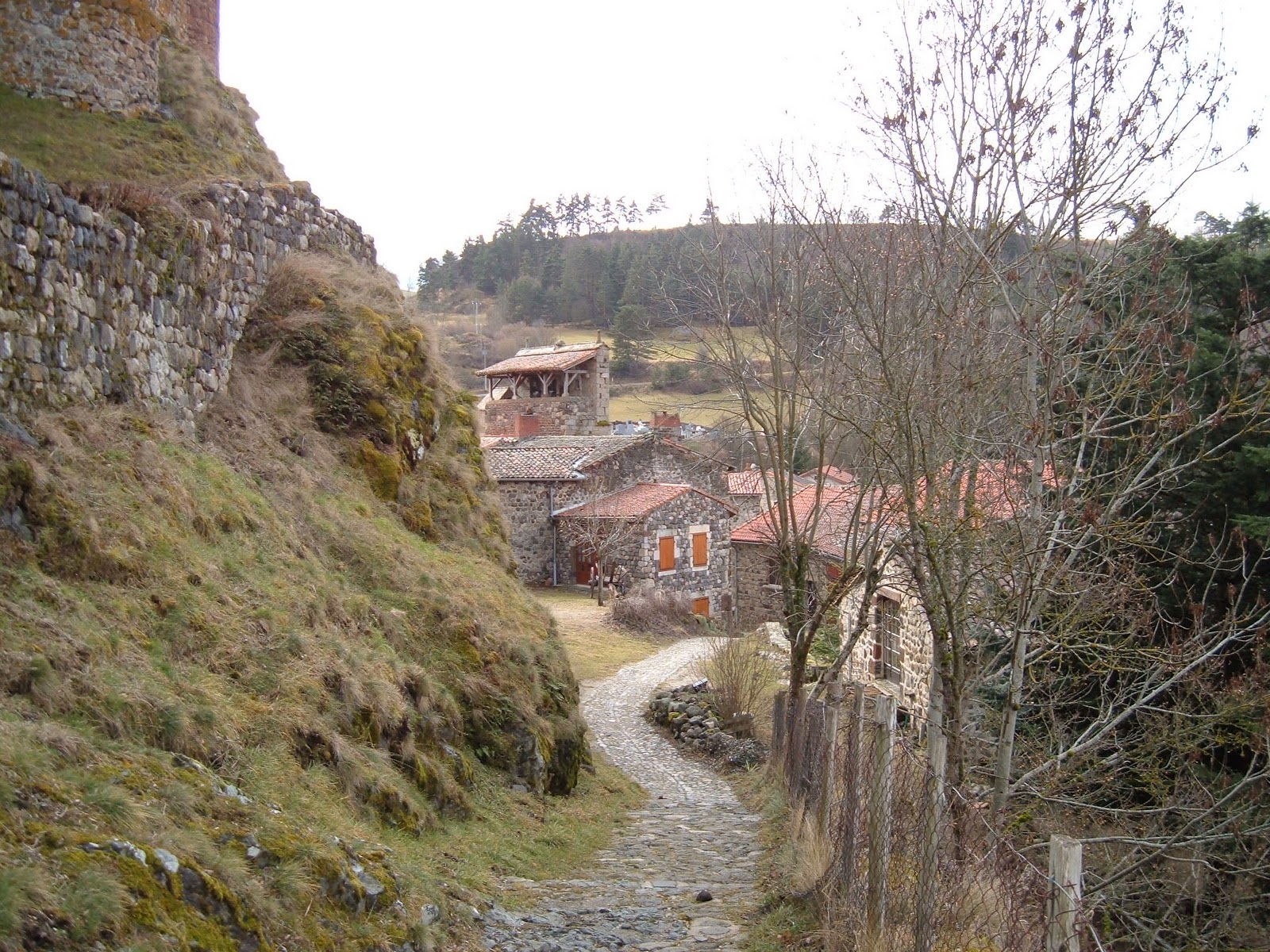
Our Wednesday excursion has turned out to be something we both really look forward to.  With the day off and school work finished, we enjoy the time to venture out, usually about one hour in any direction to continue discovering our department of the Haute Loire.  On a freezing winter day we drove south of Le Puy en Velay to an incredible little village called Arlempedes, population 142.  As we came over a hilly rise we saw, perched on a spur of volcanic rock,  the ruins of a 13 century medieval castle overlooking the gorge below.  The castle was built by the lords of Montlaur and despite its impregnable position has been sacked on numerous occasions.  The village huddled below the castle revealed a small square in front of a church with an interesting 15 century cross decorated with figures.


Skiing in Mégève!


One Friday after school in February we headed up to the Alps to a beautiful ski area called Mégève.  This town, inaugurated soon after World War 2, remains a major French ski resort with a fabulous view of Mont Blanc.  After a 3 1/2 hour drive we arrived just in time for dinner at a restaurant called La Table du Trappeur.


  I had a fantastic day of skiing on Saturday while Roger hiked the foothills and discovered the beautiful, chic shops lining the streets of Mégève.  We met up afterwards and enjoyed a "Vin Chaud" and prepared for another Savoyard dinner at a quaint chalet.  Sunday, we decided to drive an hour to Chamonix for lunch.  We returned to La Calèche, a restaurant we had visited with Allison, Chris and Paula two months earlier.  Afterwards we enjoyed the magnificent views of the mountains as we made our way back to the Auvergne.

Sunday, February 20, 2011

Fulbright Mid-Year Meeting in Paris (January 26-28)

On January 25 we took the TJV to Paris.  The first day of the meetings for the Fulbright Exchange Teachers, Chateaubriand Fellows and Fulbright Research Scholars was held at the Château de Chantilly, a beautiful  ensemble of 14th to 19th century monuments.  The Petit Château was built in 1560 and houses the apartments of the Princes of Condé (17th and 18th centuries) and the Grand Château built between 1875 and 1885 for the son of Louis-Philippe, Henri d'Orléans, Duke of Aumale (1822-1897) who bequeathed Chantilly to the Institut de France in 1886. 
After our meetings we were welcomed by the American Friends of Chantilly and heard about the great work they have done to promote ad renovate the château. The Château de Chantilly has one of the finest museums of historical paintings (after the Louvre) and a library of rare books including the famous 15th century Book of Hours of the Duke of Berry.  We had a fantastic tour of the library and were shown a very special sketch book belonging to Delacroix including the preliminary sketches for his Orientalist paintings.  


The second day of our meetings included very interesting presentations given by the Research Scholars and  Advanced Students describing their research work in France.  That afternoon we visited Musée National d'Histoire Naturelle.  The museum has been closed for 15 years and just re-opened with the original collections of animals from all over the world.  The animals are presented in "Noah's Arc" style rather than in a natural habitat.  

Wednesday, February 9, 2011

Day Trip to Parc Naturel Régional du Pilat


This was a real discovery day!  We started out for a drive and ended up finding a beautiful road through
the countryside outside of St. Etienne.  We drove up over a mountain and entered one of France's Regional Natural Parks.  The Parc Naturel Régional du Pilat is one of 50 parks set up since 1968. The French government has set aside "rural areas of outstanding beauty to protect the scenery and heritage as well as setting up sustainable economic development". After World War 2 the population in rural areas diminished significantly as many people moved to the cities. The parks have encouraged people to stay on the land and to maintain a rural culture. The Pilat Regional Natural Park preserves 700 km2 of forests, fields and moorlands. Here development is combined with environmental protection and quality production of Pilat apples, handmade arts and crafts and wines from Condrieu.  We were so impressed to learn so much from the tourist office through videos of the development of the parks.  Also, I explained I was a teacher and was given a huge bag of information for my students in CT. that will add perfectly to a special study of France's Regional Natural Parks. The photo was taken from the highest point in the park at Le Cret de L'Oeillon  and the other photo depicts a typical hamlet.


Wednesday, February 2, 2011

Brancion- Old Feudal Market Town in Burgundy


Our trip home from Beaune became so interesting as we happened upon a small,  feudal town perched up on a cliff overlooking two deep ravines.   We parked below and hiked up to the ruins of a fortress and surrounding cluster of vine covered medieval houses.  The feudal castle dates back to the 10th century and was enlarged in the 14th century by Duke Phillip the Bold.  We visited the small 12th century Romanesque church down a nearby path.  After talking to the harpist in the church we found out that four of the houses are actually occupied!

Week-end in Beaune in the Burgundy Region


On Saturday morning, January 15, Roger and I left promptly at 6am to head up to Beaune.   It is a beautiful town and wine capital of Burgundy which produces the Côte d'Or wines.  The prosperous town was the residence of the dukes of Burgundy until the 14 century when they moved permanently to Dijon.  The well-preserved ramparts form a walk around the town and the encircling moat now is occupied by gardens.   We arrived at 9am, checked into our hotel and were right on time for the Saturday morning marché set up on the place de la Halle.   After lunch we visited the famous medieval hospital,  Hôtel de Dieu.  In 1443, after the Hundred Years War and the Black Plague had devastated Beaune,  Nicolas Rolin, the chancellor of Burgundy, paid to build the hospital for the people of the town.  The building is perfectly preserved with its medieval decor and was used as a general hospital until 1971!  We also visited the Musée du Vin de Bourgogne( BurgundyWine Museum) and visited the Collégiale Notre Dame before leaving Sunday morning.